
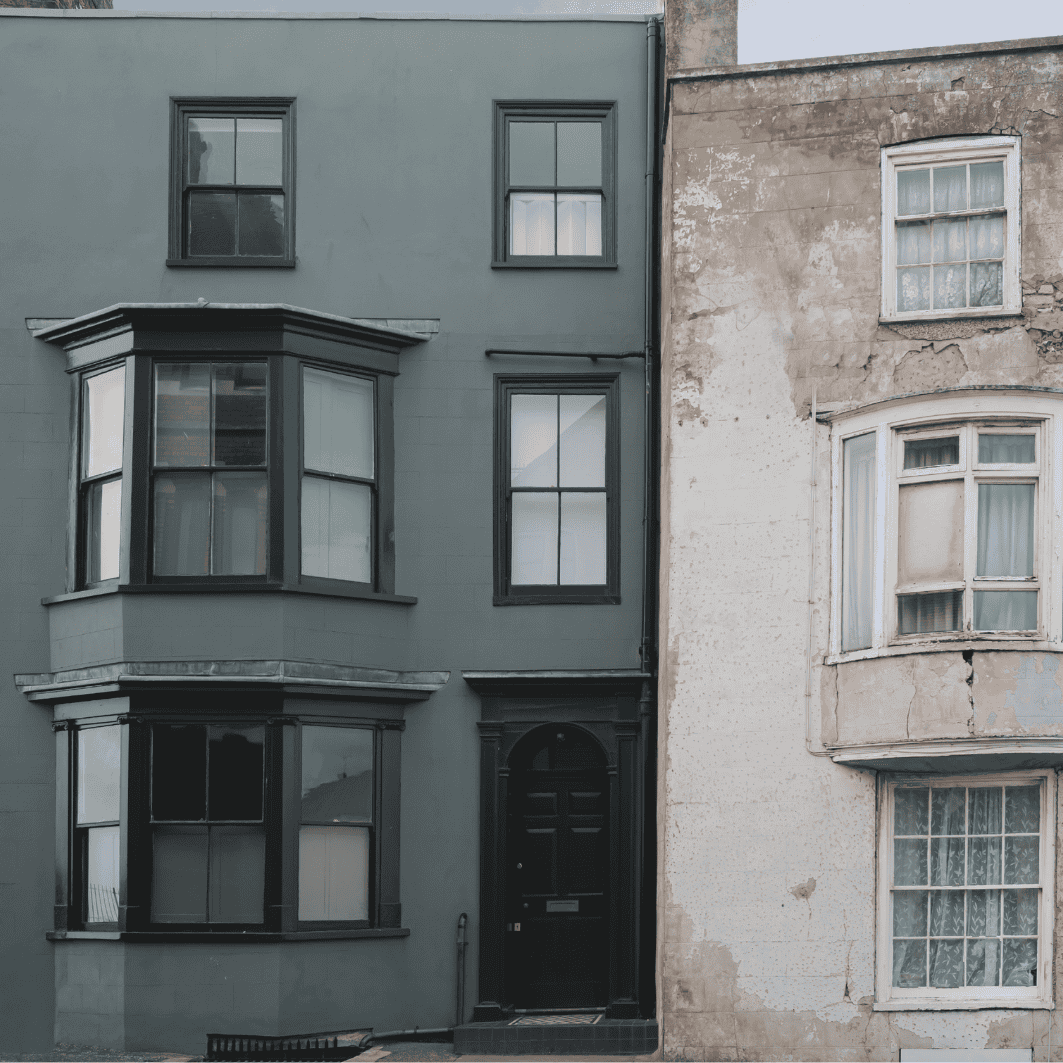
Some of the best communities I’ve come to know weren’t the ones everyone was talking about—they were the ones quietly improving year after year. I’ve learned that neighbourhoods have a rhythm of their own. You start to notice new businesses, families spending time in local parks, community events drawing bigger crowds, and small investments that signal something larger is taking shape. Those subtle changes often tell a more meaningful story than market headlines ever will.
D. Chen
When people talk about real estate, the conversation almost always revolves around home prices.
Is the market up? Is it down? Is now the right time to buy?
While those are important questions, they often overlook something even more valuable: neighbourhoods evolve long before home prices reflect those changes.
Some of the strongest real estate decisions aren’t made by predicting the market—they’re made by recognizing communities that are quietly transforming.
Whether you’re looking throughout the GTA, Durham Region, Peterborough, or the Kawarthas, learning to identify these early signs can help you buy with confidence and position yourself for long-term value.
A Community Is More Than a Collection of Homes
When buyers search for a property, it’s natural to focus on the house itself. The kitchen, the number of bedrooms, the backyard, and the layout often become the deciding factors.
But after the excitement of moving in wears off, daily life is shaped far more by what exists outside your front door.
The local café where neighbours gather.
The park where children play.
The walking trails you use every weekend.
The schools, local businesses, and community events that create a sense of belonging.
These are the qualities that define a neighbourhood, and they’re often the first indicators that an area is changing for the better.
Growth Doesn’t Happen Overnight
Neighbourhoods rarely transform all at once.
Instead, they evolve through a series of small improvements that many people overlook.
A new local business opens.
Roads and sidewalks are upgraded.
Community centres receive investment.
Parks are revitalized.
Schools expand to accommodate growing families. Each improvement may seem minor on its own, but together they begin to reshape how people experience the area. Long before prices rise, communities become more desirable.
Follow the Investment
One of the simplest ways to understand where a neighbourhood is heading is to pay attention to where investment is taking place.
Public infrastructure often signals confidence in future growth.
Private businesses usually follow where they see opportunity.
When municipalities invest in transportation, recreation, streetscapes, or public spaces, they’re often supporting a vision that extends years into the future.
Likewise, when independent cafés, restaurants, boutique shops, and professional services begin opening in an area, they’re responding to growing demand.
Neither guarantees higher home values—but together they often indicate positive momentum.
People Shape Communities
Buildings don’t create neighbourhoods.
People do.
One of the strongest signs that an area is evolving is the diversity of the people choosing to call it home.
Young professionals.
Growing families.
Retirees looking for a quieter pace.
Entrepreneurs opening local businesses.
Each group contributes something different, creating stronger connections and a more vibrant community.
As communities become more active and engaged, they naturally become more attractive to future buyers.
Look Beyond Today’s Headlines
Market reports often focus on regional averages.
The reality is that every neighbourhood tells its own story.
Two communities only a few kilometres apart can experience very different levels of demand.
One may already be fully established.
The other may be quietly building momentum.
That’s why broad market statistics only tell part of the story.
Understanding what’s happening on the ground often provides far more valuable insight than watching monthly price reports alone.
Local Knowledge Makes the Difference
This is where local experience becomes invaluable.
Across Durham Region, Peterborough, the Kawarthas, and the GTA, every community has its own character, pace of growth, and long-term potential.
Some areas attract families because of excellent schools.
Others appeal to commuters because of improving transportation.
Some are becoming lifestyle destinations thanks to trails, waterfronts, restaurants, and growing downtown cores.
These are changes that can’t always be measured in market data—but they’re often felt by the people who live there every day.
Think Beyond Resale Value
It’s easy to view neighbourhoods strictly through the lens of appreciation.
But value isn’t only measured in dollars.
Living in a community that supports your lifestyle has its own return.
Being able to walk to local businesses.
Feeling connected to neighbours.
Having access to parks, recreation, and local events.
Enjoying shorter commutes or spending weekends exploring nearby trails and waterfronts.
These are qualities that improve everyday life while often strengthening a community’s long-term appeal.
Buying for Tomorrow
Every buyer hopes to make a smart investment.
Sometimes that means finding a beautiful home.
Other times, it means recognizing the future of a neighbourhood before everyone else does.
Communities don’t become desirable overnight.
They grow through people, investment, and thoughtful planning.
By the time home prices fully reflect those changes, the opportunity has often already passed.
The smartest buyers don’t simply ask where prices are today.
They ask where a neighbourhood is headed.
That perspective can make all the difference.